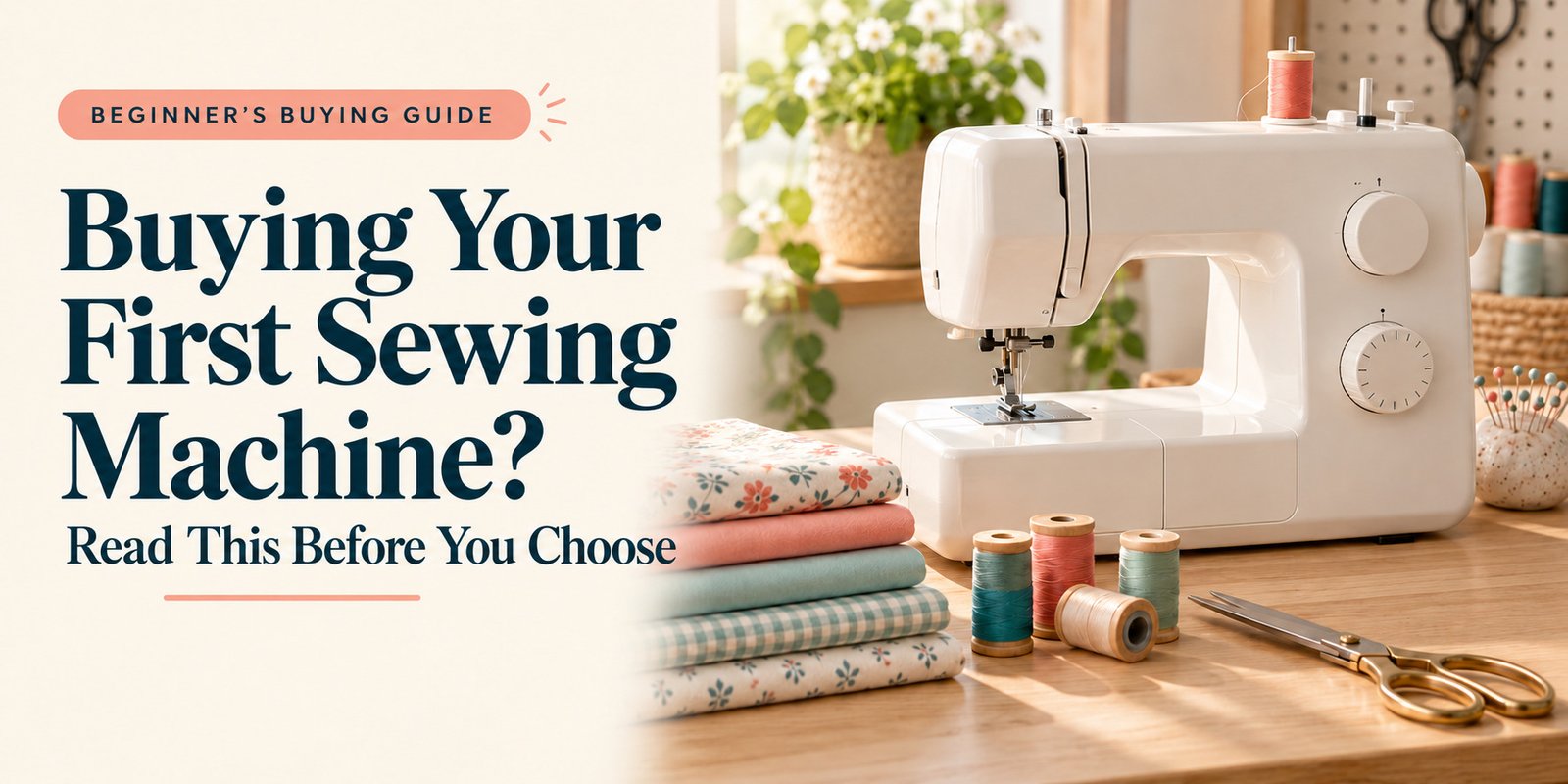
Buying your first sewing machine is an exciting step towards making your own clothes, handling everyday repairs, and exploring creative projects. But with so many models and features available, choosing one can feel confusing.
This sewing machine buying guide for beginners explains what to check, which features matter, and how to choose a sewing machine that suits your needs and budget.
Start with What You Want to Sew
Before comparing machines, think about your first few projects. Do you want to shorten trousers, stitch cushion covers, make simple garments, or try quilting?
Your answer will help you focus on the right features.
- Everyday repairs: Look for straightforward controls, a straight stitch, a zigzag stitch, and reverse stitching.
- Garment making: Adjustable stitch length, buttonhole stitching, and a useful selection of presser feet can help.
- Home décor: Consider the fabric thickness and the space needed to handle larger projects.
- Quilting: Check the working space, feed-dog controls, and compatibility with suitable quilting feet.
The best sewing machine for beginners is one that handles the work you actually plan to do.
Mechanical vs Computerized Sewing Machine: Which Should You Choose?
One of the first decisions is whether to buy a mechanical or computerized model. Both can suit beginners.
Mechanical sewing machines
Mechanical machines typically use dials or knobs to select stitches and adjust settings. Their straightforward controls may appeal to someone who prefers a hands-on approach.
Check that the stitch markings are clear and the controls are comfortable to use.
Computerized sewing machines
Computerized machines use electronic controls, often with a screen or buttons for stitch selection. Depending on the model, they may include speed adjustment, needle positioning, and automatic buttonhole functions.
These features can make some tasks easier, but you should still check how simple the machine is to thread and operate.
When comparing a mechanical vs computerized sewing machine, focus on ease of use, useful features, service support, and your budget.
Beginner Sewing Machine Features Worth Checking
A long feature list can look impressive. However, a few practical functions will often matter more during your first months of sewing.
Straight stitch and zigzag stitch
A straight stitch is essential for basic seams and topstitching. A zigzag stitch is useful for finishing some raw edges and working with certain stretch fabrics.
Check whether stitch length—and zigzag width—can be adjusted to suit different tasks.
Comfortable speed control
You should be able to start gently and sew slowly without feeling that the machine suddenly races ahead. Some models offer a speed limiter, while others rely mainly on the foot pedal.
If possible, test how easily you can maintain a slow, steady pace.
Simple threading
Look for clearly marked threading guides and an easy-to-follow manual. An automatic needle threader can be helpful, especially if threading a small needle eye is difficult for you.
Ask for a demonstration so you understand how the threading system works.
Convenient bobbin system
Check how the bobbin is wound, inserted, and accessed. A visible top-loading bobbin can make it easier to monitor the remaining thread, while front-loading systems may also be straightforward once learned.
Choose a bobbin system you can use confidently.
Reverse stitching
Reverse stitching helps secure the beginning and end of many seams. Make sure the reverse control is easy to reach while guiding your fabric.
Buttonhole function
If you plan to sew shirts, dresses, or other buttoned garments, check the buttonhole process. Compare how many steps it takes and whether the required foot is included.
Free arm
A free arm makes it easier to work around tubular sections such as sleeves and trouser hems. This can be useful when choosing a sewing machine for home use.
Don’t Choose by the Number of Built-In Stitches Alone
A machine with hundreds of built-in stitches may be tempting, but beginners often use a small selection regularly.
Start by checking the quality and adjustability of the stitches you need. A machine that produces consistent straight stitches and is comfortable to operate may serve you better than one with decorative options you rarely use.
Extra stitches are useful when they match your interests and projects.
Match the Machine to Your Fabrics
Think about the materials you expect to sew most often. Lightweight cotton, stretch jersey, denim, and upholstery fabric place different demands on a machine.
Ask the seller to demonstrate the model using fabric similar to your intended projects. For thicker materials, test several layers and a seam intersection, rather than a single flat piece.
Needle type, thread, presser foot, and machine settings also affect results. A suitable needle helps, but it does not increase a machine’s underlying capacity.
Avoid assuming that every domestic sewing machine can regularly handle heavy fabric or thick multilayer seams.
Set a Budget for the Complete Setup
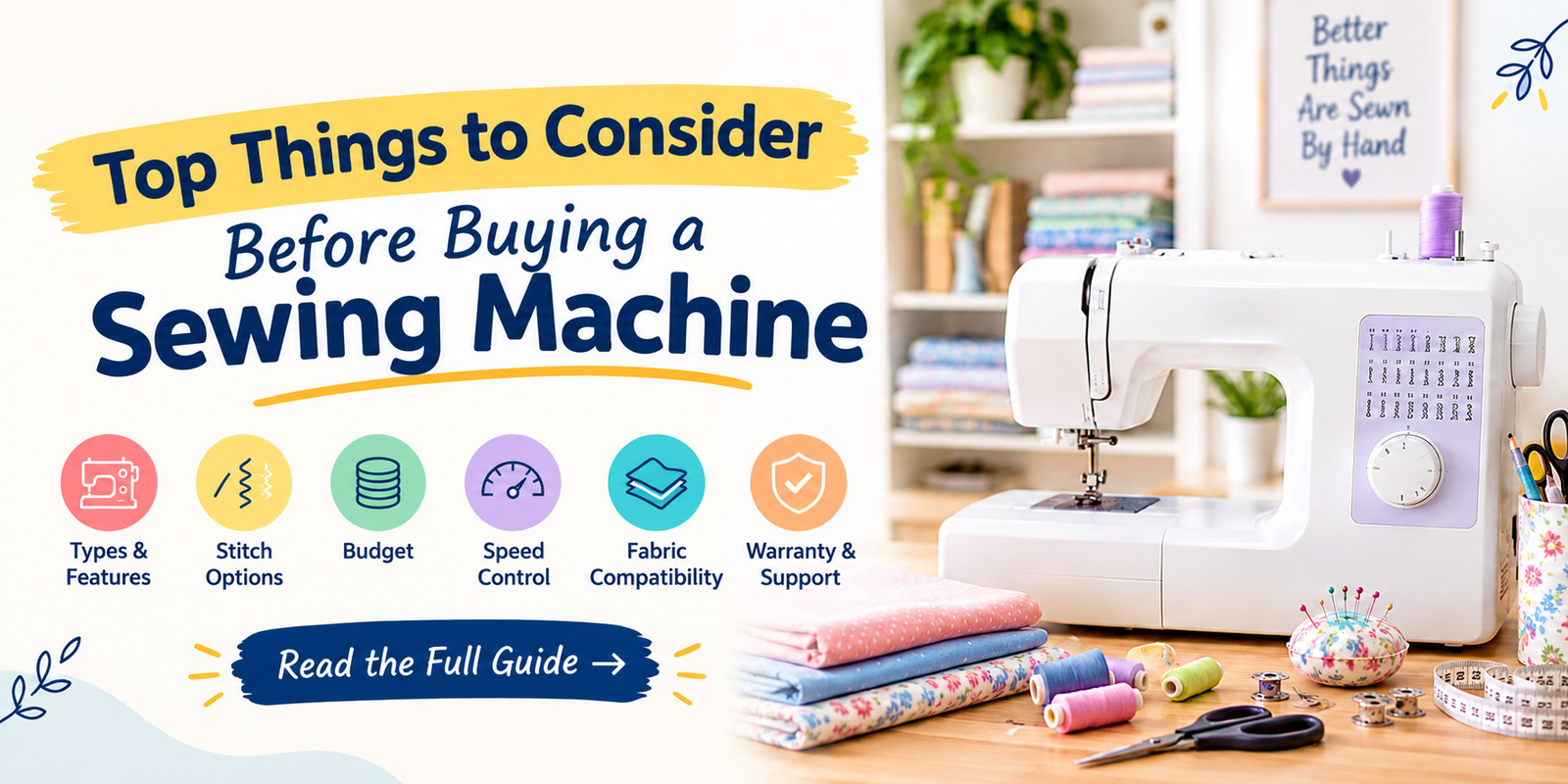
Your sewing machine budget should include more than the machine itself. You may also need:
- Fabric scissors and measuring tools
- Suitable sewing needles and thread
- Compatible spare bobbins
- A seam ripper
- Additional presser feet for specific projects
- A protective cover or carrying bag
Check which sewing machine accessories come in the box before buying extras. Bobbins and presser feet are not universally interchangeable, so confirm compatibility with the exact model.
Check Warranty and Service Support
Even an easy-to-use sewing machine may need adjustment, maintenance, or replacement parts over time.
Before purchasing, ask:
- What does the sewing machine warranty cover?
- Where is the nearest authorized service centre?
- Are compatible parts and accessories readily available?
- Is an introductory demonstration included?
- Does the seller provide help with setup and basic operation?
Read the warranty terms carefully, including exclusions and any servicing requirements. Convenient support can make ownership much easier for a beginner.
Try the Machine Before Buying
A short demonstration can reveal more than a feature list. If possible, practise threading the machine, inserting the bobbin, selecting a stitch, and sewing a few lines.
During the test, check whether you can:
- Start and stop smoothly
- Maintain a comfortable sewing speed
- See the needle area clearly
- Guide fabric without excessive pulling
- Reach the controls easily
- Understand the settings without repeated assistance
Ask the seller to explain any skipped stitches, thread breakage, or uneven feeding during the demonstration.
Plan for Storage and Basic Maintenance
Choose a machine that fits your workspace and is manageable to lift if you need to put it away after use.
For basic sewing machine maintenance, follow the manufacturer’s instructions on cleaning, needle replacement, and servicing. Remove lint as directed and only oil the machine if the manual specifically instructs you to do so.
A correctly sized sewing machine bag can help protect your machine from dust and make carrying it more convenient. Check the machine’s dimensions and weight against the bag’s size, handles, and carrying capacity.
Common First-Time Buying Mistakes
Avoid choosing a machine only because it has the lowest price, the most stitches, or an attractive appearance.
Other common mistakes include overlooking service availability, buying before checking fabric suitability, and spending the entire budget without allowing for basic tools.
Your first sewing machine should feel understandable and comfortable enough that you want to keep practising.
Frequently Asked Questions
What is the best sewing machine for beginners?
The best option depends on your projects, budget, and preferred controls. Look for reliable basic stitching, manageable speed, straightforward threading, and accessible service support.
Is a computerized sewing machine suitable for a beginner?
Yes. A computerized model can suit a beginner if its controls are clear and its features are useful. Try it before buying to see whether you find it comfortable to operate.
How many stitches does a beginner need?
There is no fixed number. Straight stitch, zigzag stitch, and a suitable buttonhole function cover many basic projects. Other stitches become useful as your sewing interests develop.
Can a beginner sewing machine sew denim?
Some domestic models can handle certain denim projects within their specified capabilities. Check the manufacturer’s guidance and test the intended fabric layers, especially thick seams.
What should I buy with my first sewing machine?
Start with compatible needles and bobbins, suitable thread, fabric scissors, measuring tools, and a seam ripper. Add specialist accessories when a project requires them.
Choose a machine around your first projects, test its everyday functions, and check the support available after purchase. A well-matched machine gives you a comfortable starting point for building your sewing skills.